
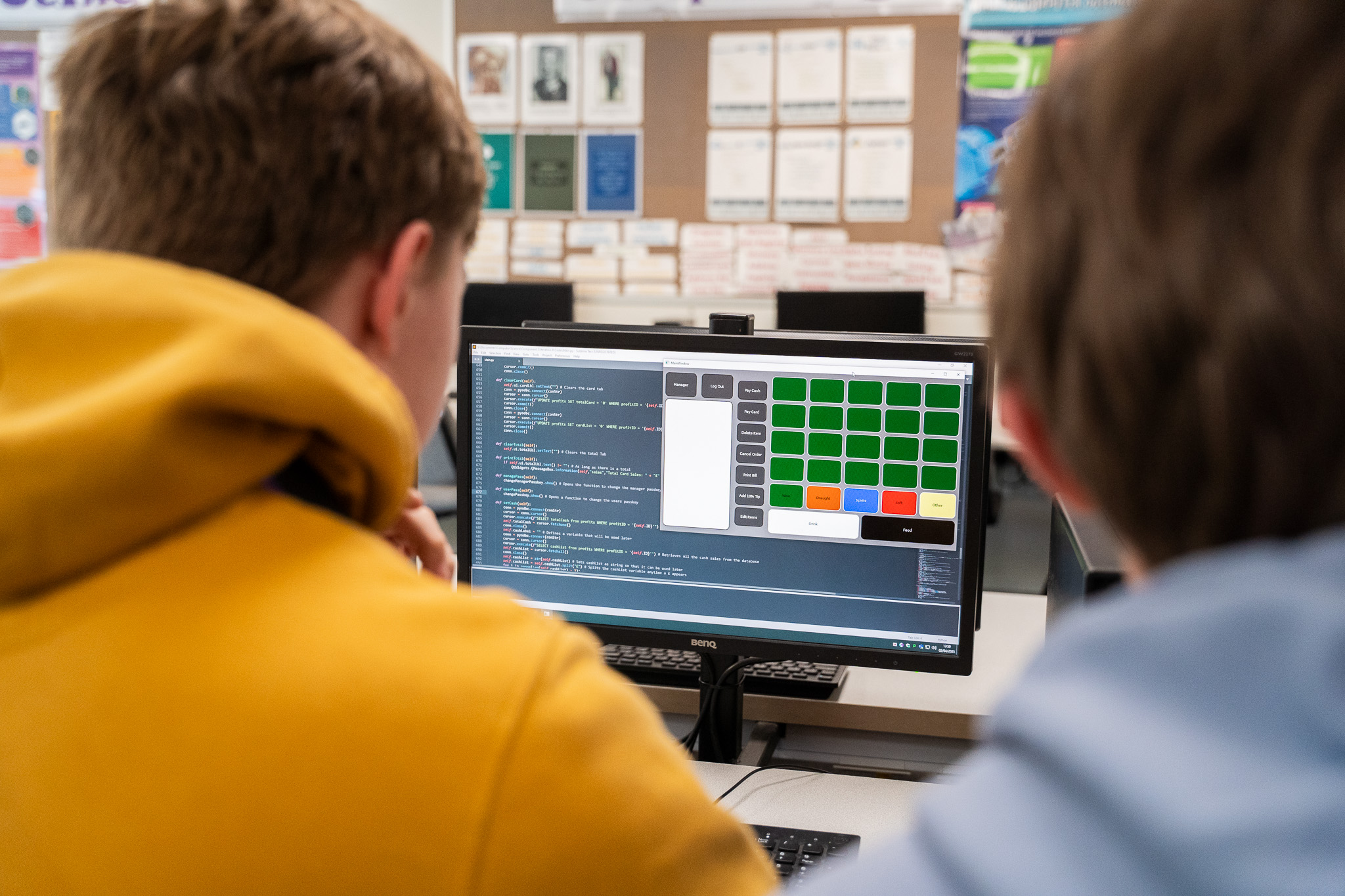
What is Computing?
This course offers opportunities to learn about both the inner workings of computers and opportunities to learn how to code solutions to problems in both Python and LMC (a form of assembly language). We cover content from how a CPU works to algorithmic complexity, to types of programming language. You will learn in a manner of different ways from theory sessions to practical coding sessions, which ultimately will result in you being a well rounded, logical thinking Computer Scientist.
Why study Computing?
Computer Science helps you understand how computer systems work, including how data is stored, processed, and transmitted. You will develop problem-solving skills by designing algorithms, writing programs, and applying techniques such as abstraction and decomposition. This course also covers key areas such as data representation, CPU architecture, networking, and encryption and hashing. These skills are highly valued by universities and employers because they demonstrate logical thinking, precision, and the ability to solve complex problems.
Is Computing right for you?
Computer Science is ideal for students who enjoy problem solving and thinking logically. You should be confident in working with numbers and be able to break down complex problems into smaller ones. An interest in how computers work, not just using them but understanding what is happening behind the scenes, is essential. This course requires prior experience in programming. Students should already be familiar with writing code and understanding basic concepts such as variables and sequencing. Examples of previous written code will be requested upon enrolment and will be used to determine suitability for the course.
What will you study?
Year 1
The characteristics of contemporary processors, input, output and storage devices, software and software development, exchanging data, data types, data structures and algorithms, legal, moral, cultural and ethical issues, elements of computational thinking, problem solving and programming, algorithms
Year 2
Exchanging data, data types, data structures and algorithms, elements of computational thinking, problem solving and programming, algorithms, and a coursework project producing a coded solution to a problem
What happens outside lessons?
Students studying Computer Science are not always in the classroom learning. We take part in several activities outside timetabled sessions. These include:
Guest speakers from local businesses / industry
Inzpire
Nicander
Participation in Bebras UK
“A level Computer Science is, overall, a really good course. It covers a very wide range of topics, it's taught very well and at a reasonable pace. The lessons are interactive with students which makes the course more fun and engaging. Due to the nature of some topics, parts of the course can be very challenging. Overall, Computer Science is a great course and would recommend to anyone interested.”
Where can Computing take you?
Software Developer, Systems Analyst, Games Developer, Network Administrator, Financial Analyst, Business Analyst, Robotics Engineer, Research Scientist, Web Designer, UI/UX Designer, Teacher, Military
What subjects go well with Computing?
Maths (strongly recommended), Design, Physics, Business studies